

Client and Contact Database
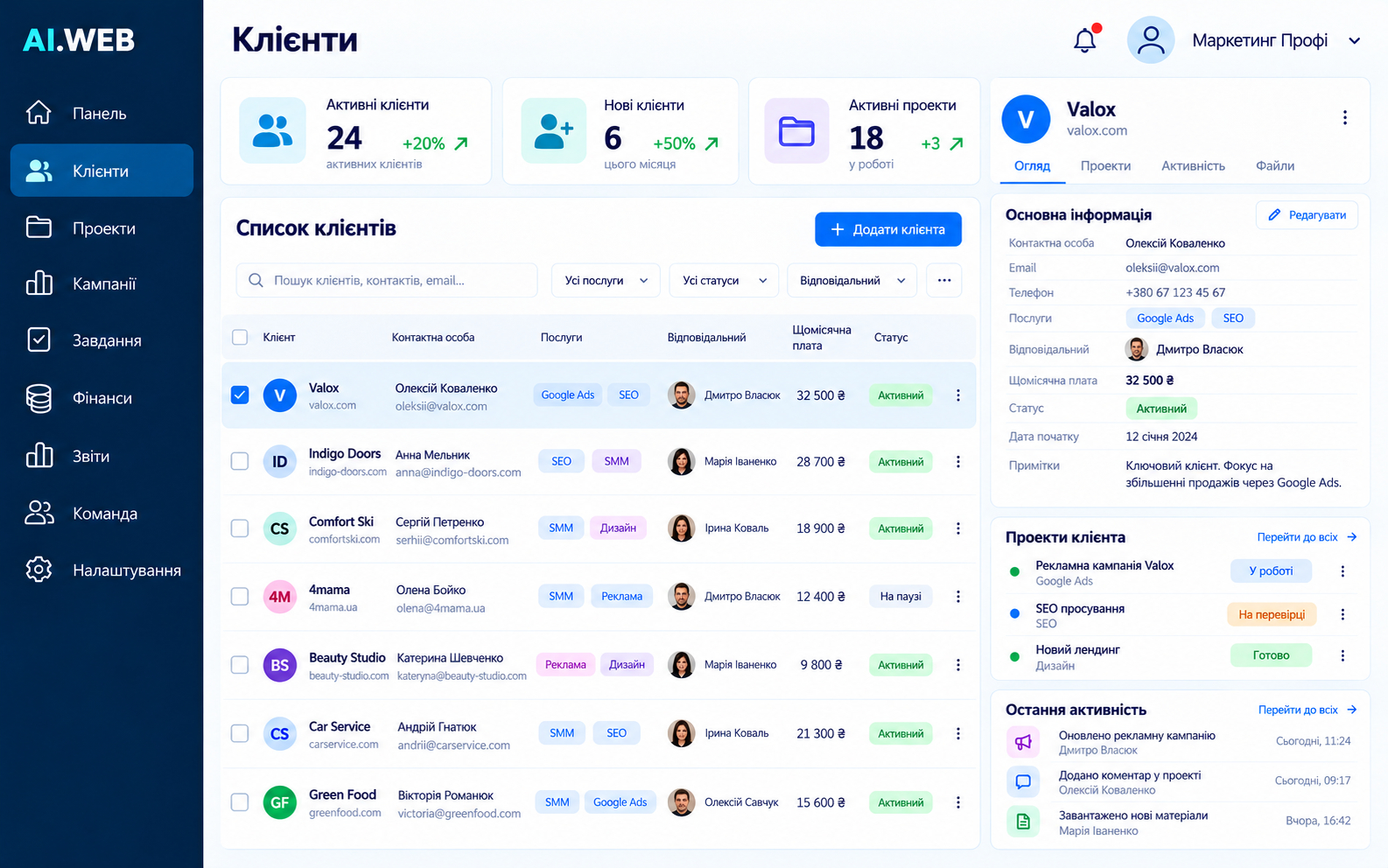
Centralized customer information, business details, agreements, and relationship history all in one convenient profile.
Marketing agency CRM software that streamlines client relationships, campaign management, project workflows, and team coordination in one unified platform.
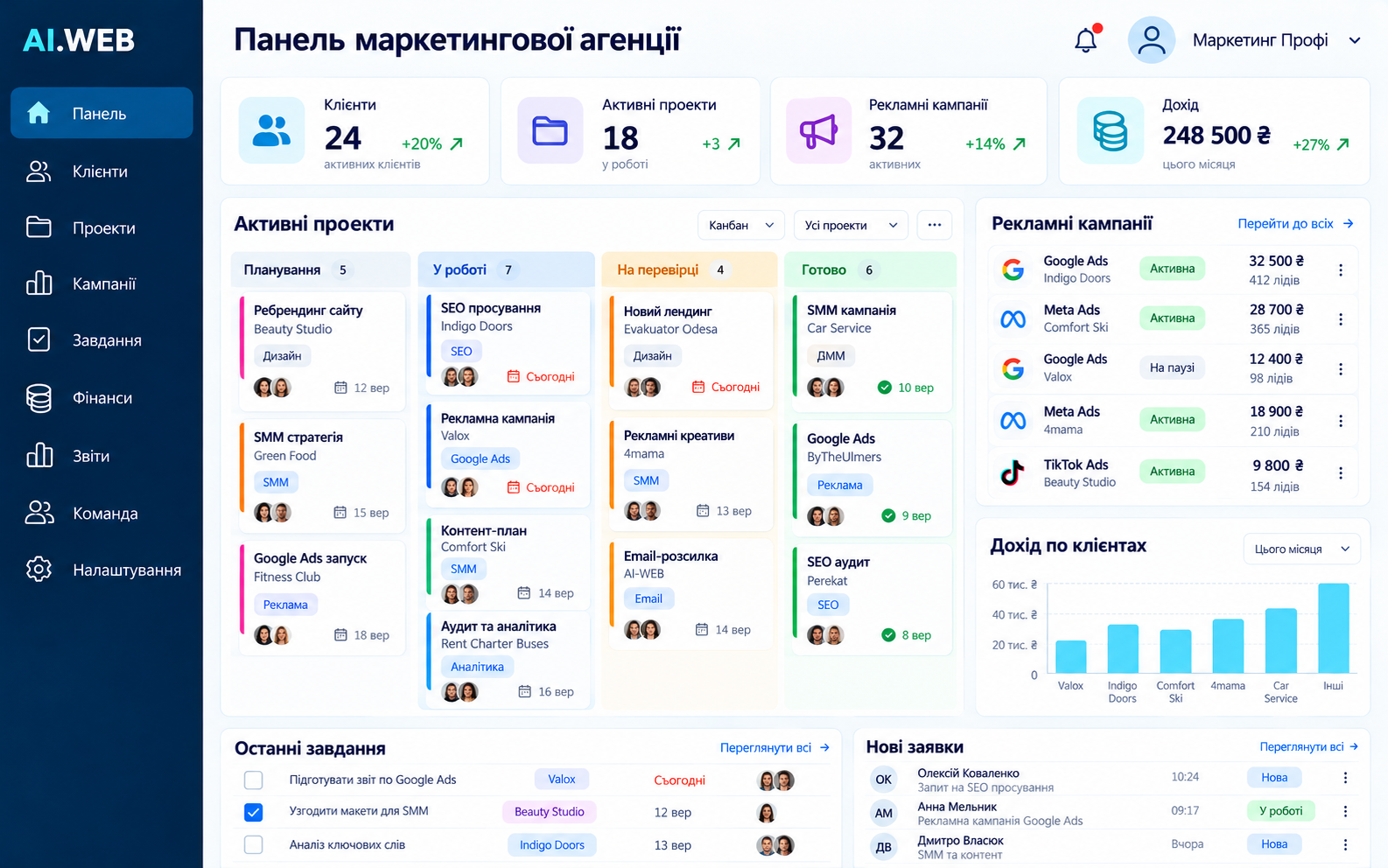
Centralized customer information, business details, agreements, and relationship history all in one convenient profile.
Streamlined inquiry management from initial consultation and project briefing through proposal delivery and contract execution.
Centralized storage for project objectives, audience insights, budget allocations, client preferences, and agreed-upon service scope.
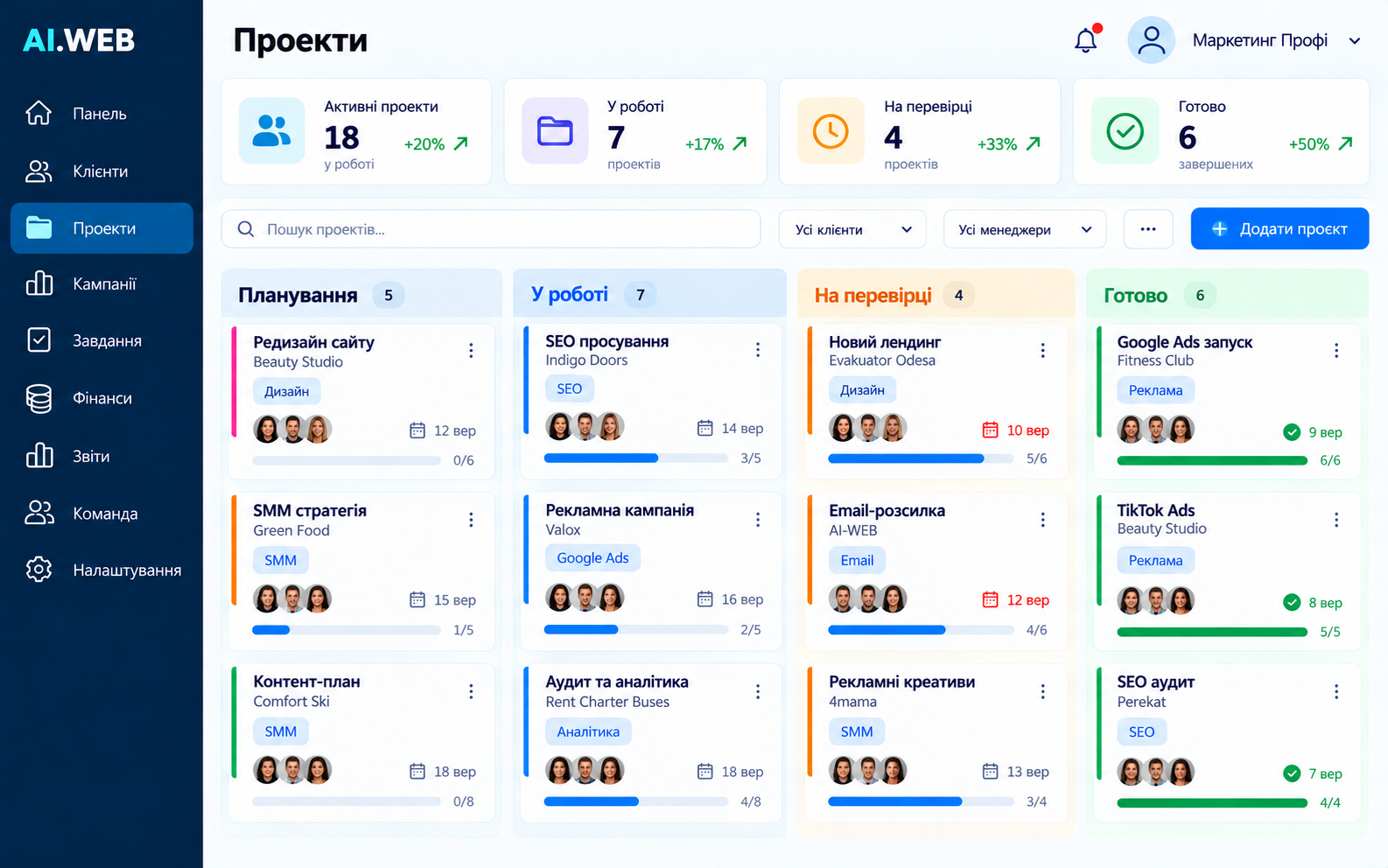
Individual project cards featuring tasks, timelines, assigned team members, supporting documents, and real-time status updates.
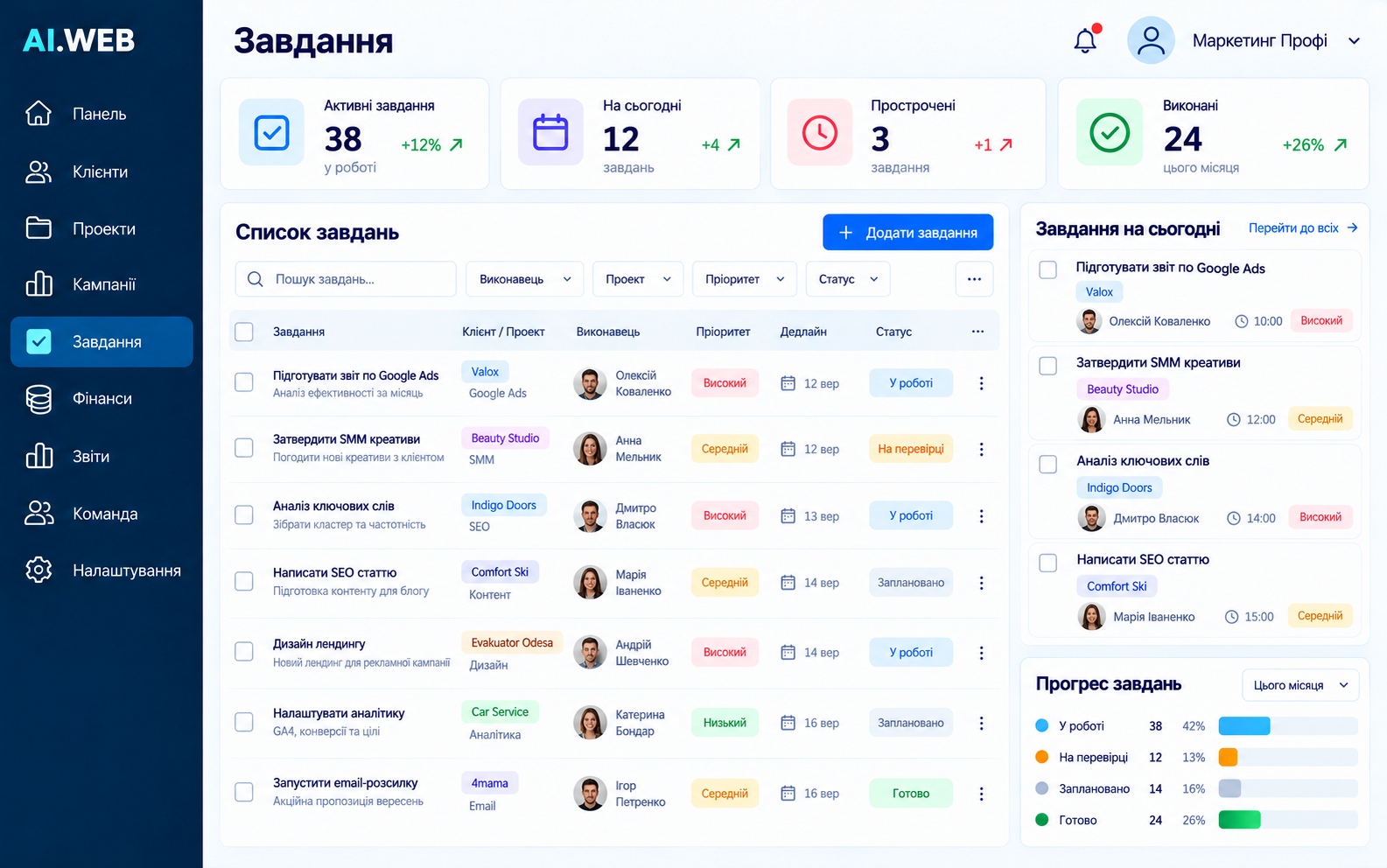
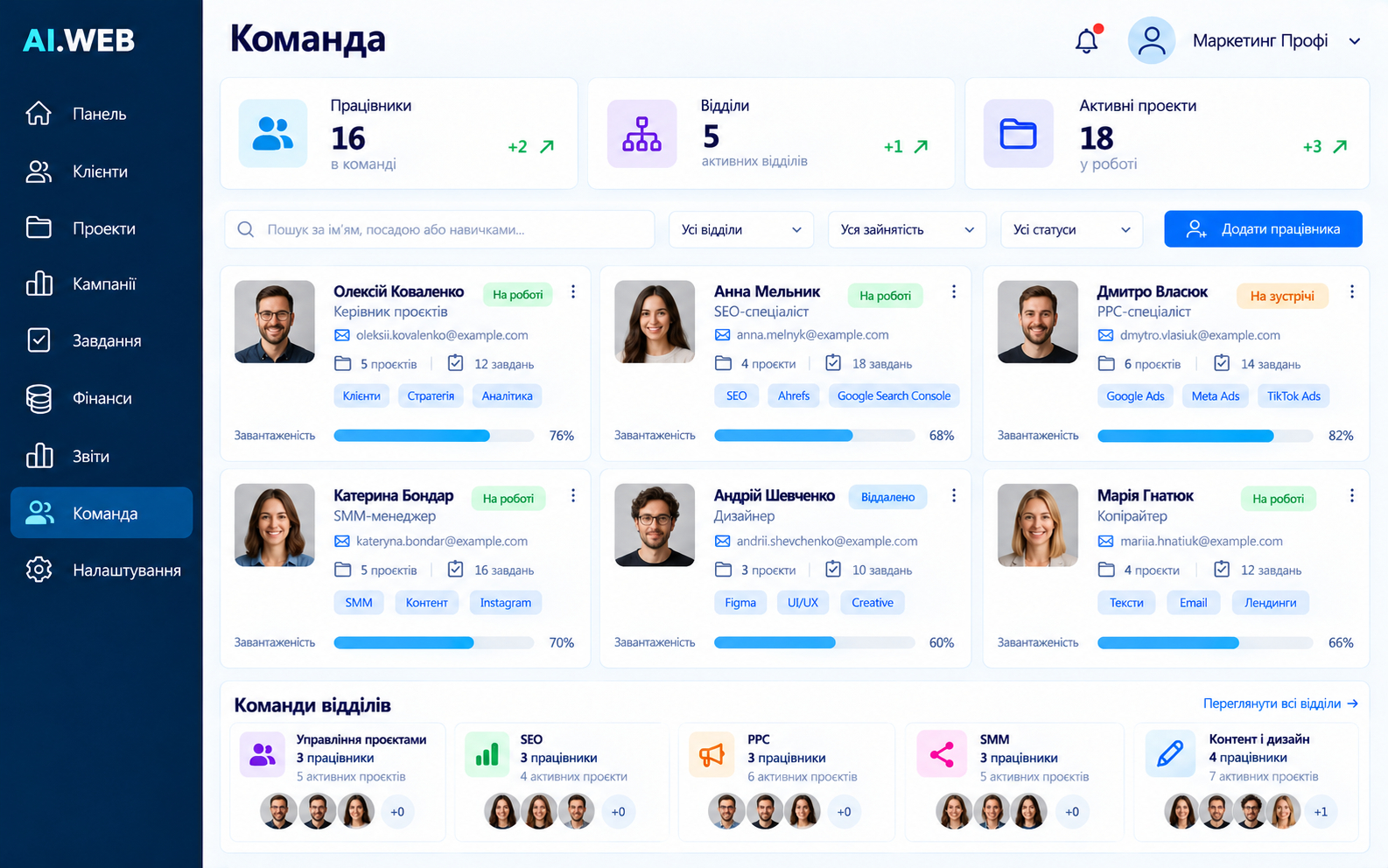
Streamline your creative workflow by assigning tasks across marketers, designers, copywriters, and external vendors while maintaining clear visibility into deadlines and priority levels.
Organize your marketing campaigns, email sequences, and content releases with client and project-specific scheduling in one centralized calendar.
Track team hours and subcontractor expenses to accurately calculate service delivery costs and project profitability.
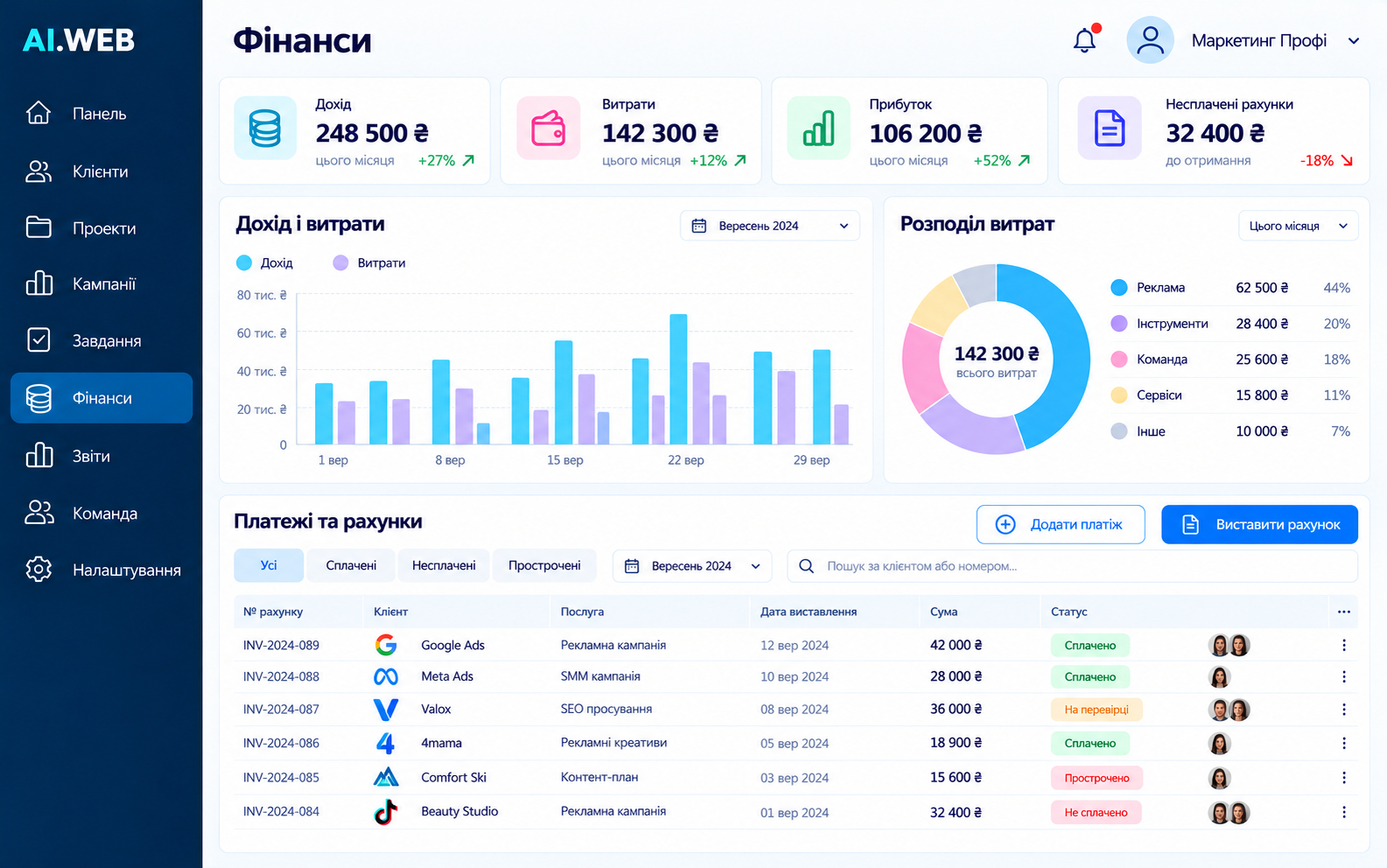
Invoice management, advance payment tracking, milestone billing, and financial settlement with clients and service providers.
Marketing Agency CRM Software — is a platform designed to streamline team operations, manage client relationships, monitor advertising campaigns, track tasks, control budgets, and measure financial performance. All workflows converge in a single interface, enabling leadership to maintain visibility into project status, team capacity, and overall agency efficiency.
We build custom CRM solutions for digital marketing agencies, SEO firms, social media agencies, creative studios, and in-house marketing teams. The platform adapts to your business model, team size, and service offerings.
Centralize client information and maintain a complete history of interactions. The CRM tracks new leads, proposals, contracts, and collaboration history in one searchable database.
Every client engagement includes dedicated tasks, deadlines, assigned team members, and allocated budgets.
The CRM coordinates work across SEO specialists, paid media experts, designers, copywriters, and account managers—eliminating the need for multiple disconnected spreadsheets.
Key capabilities:
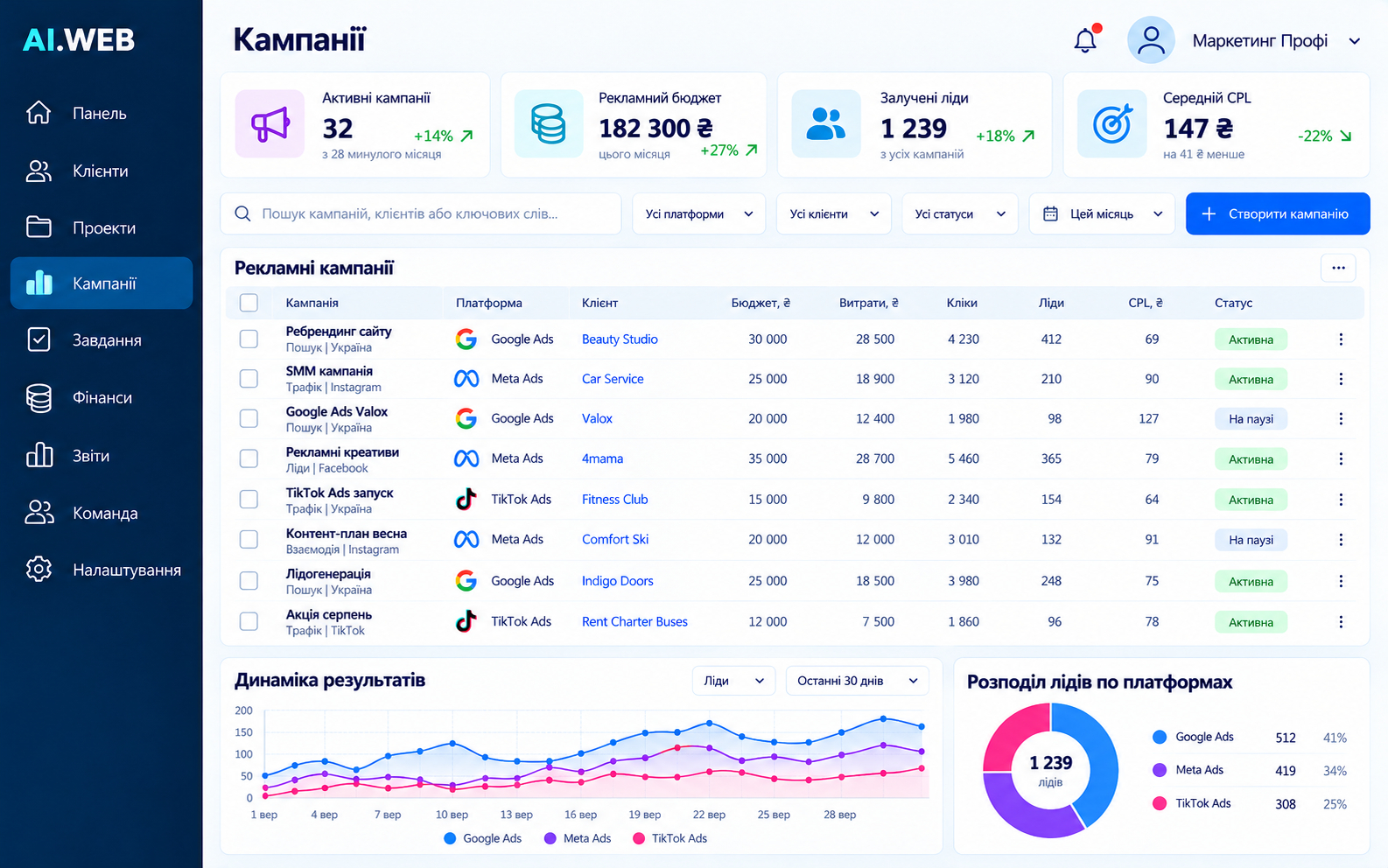
Track active advertising campaigns, forecast spend, and analyze promotion results across client accounts.
The platform integrates with Google Ads, Meta Ads, and other ad networks via native API connections to pull performance data automatically.
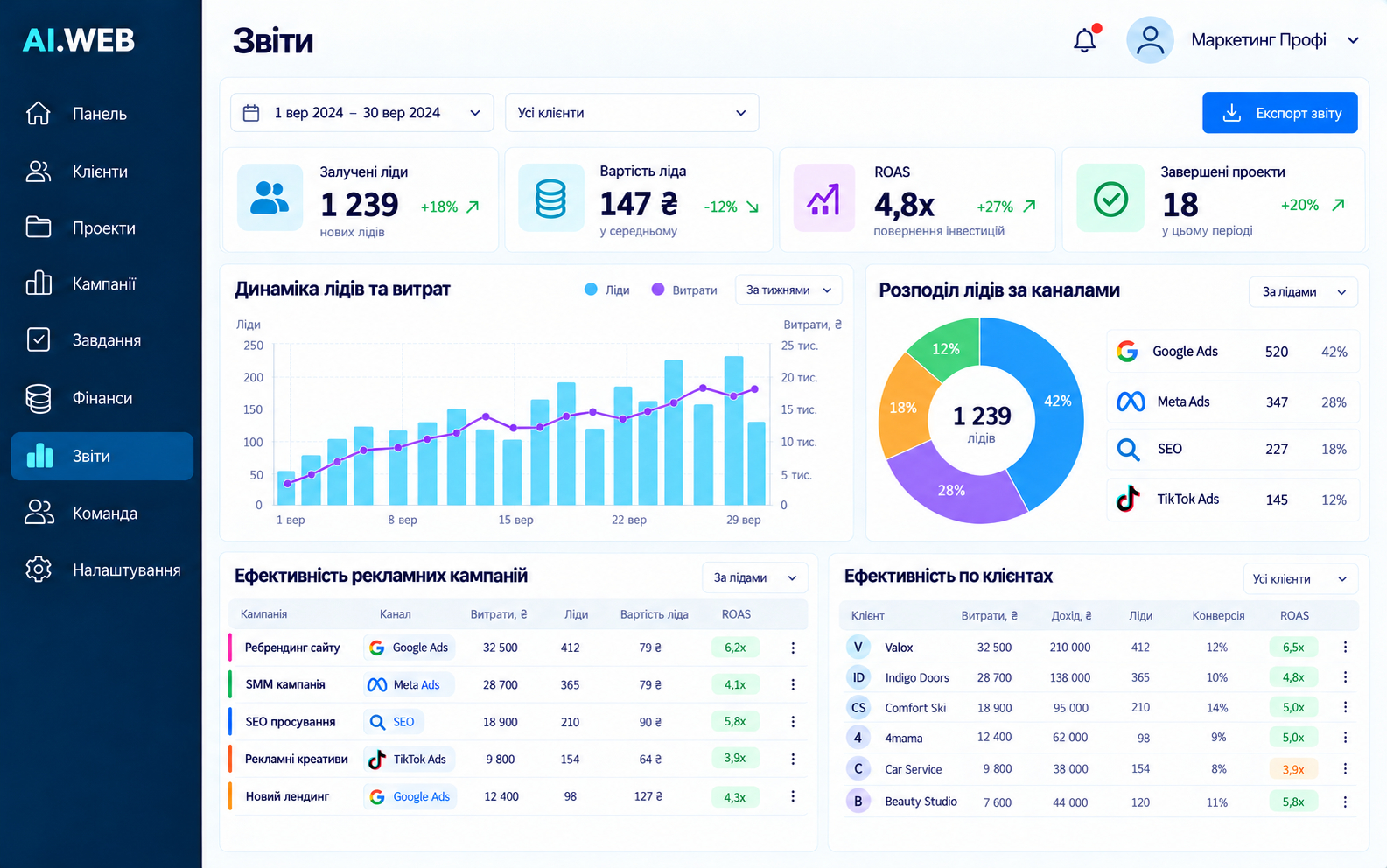
Monitor campaign budgets, spending, lead volume, customer acquisition cost, and other critical KPIs in real time.
Gain visibility beyond top-line revenue to understand the financial health of individual client engagements.
The system accounts for service fees, subcontractor costs, team labor, ad spend, and recurring charges to calculate true project margins.
Leadership can evaluate profitability by service line and business segment to make data-driven decisions.
Generate client and executive reports without manual data collection from multiple platforms.
The CRM automates weekly and monthly reporting, tracks campaign performance, logs completed deliverables, and highlights key metrics—saving hours of administrative work.
We don't constrain your operation to generic templates. We architect CRM systems around your actual business workflows and processes.
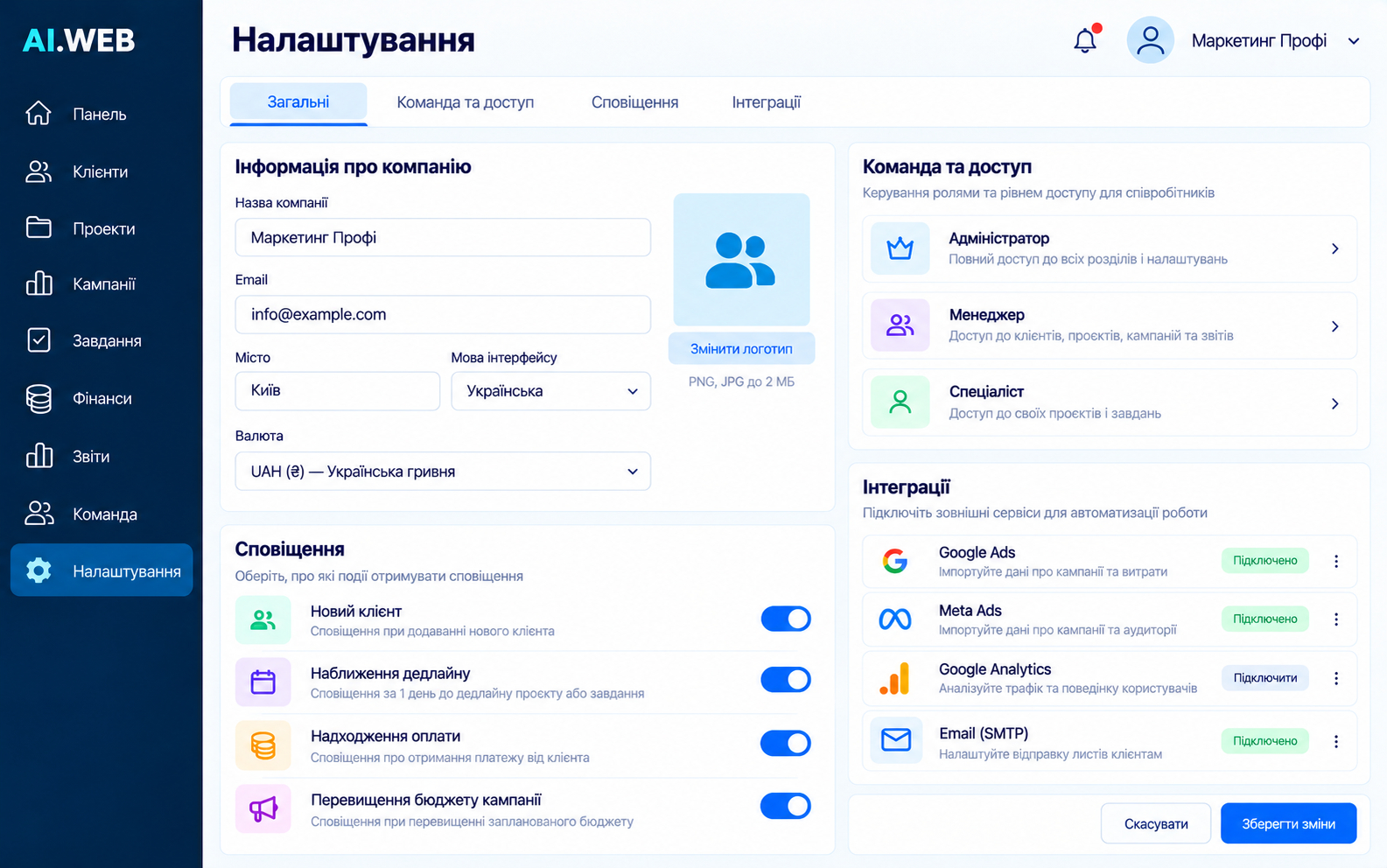
The platform can include client portals, subscription service management, automated invoicing, content approval workflows, custom analytics dashboards, and integrations with your existing tech stack.
Your CRM evolves with your business: new features, modules, and integrations are built into the system architecture and deployed as needs change.
Every project has its own requirements, so pricing and timelines vary based on your specific needs, feature set, and scope. Below are typical cost ranges for common solutions.
Final pricing is determined once we clarify your specific requirements. Paid third-party services, integrations, and custom development work are quoted separately.
We've compiled answers to your most pressing questions to help guide your decision. Can't find what you're looking for? Reach out to our team.
Ask Your QuestionHere's how it works: AI-WEB provides a proprietary CRM platform that we customize to fit your business needs. We configure modules, data fields, workflow statuses, user roles, and reporting dashboards to match your operations. Should your processes require additional functionality, we'll evaluate custom development and third-party integrations separately.
We establish your initial CRM setup by mapping core business processes around customer management, communication workflows, orders, and team responsibilities. Together, we'll define what data to capture, clarify ownership of lead handling, and outline your order fulfillment pipeline. All agreed-upon modules, reporting dashboards, and configuration specifications are documented in the proposal before implementation begins.
Before we begin, we'll prepare a detailed proposal outlining the scope of work and payment terms. We break down CRM configuration costs separately, along with platform licensing fees, hosting, and ongoing support. Any integrations, add-on modules, and third-party services are itemized as distinct line items. All payment schedules and milestones are confirmed in our service agreement.
Data migration can be incorporated into your implementation process. We start by auditing your current system's export capabilities, including field structure, data completeness, and duplicate records. From there, we identify which contacts, products, orders, and other records are eligible for import, align on scope, and validate the migration results to ensure accuracy.
We offer comprehensive hosting and managed support services, with the flexibility to deploy your CRM on a dedicated server environment tailored to your needs. If you're running your own infrastructure, we'll evaluate deployment feasibility based on our platform's technical specifications. Prior to implementation, we'll establish clear agreements regarding access protocols, system administration, backup procedures, and hosting fees.
Mobile functionality depends on your selected modules and specific workflow requirements. During the discovery phase, we identify key mobile use cases—such as client management, status updates, task tracking, and scheduling—to ensure your team can work efficiently on the go. We validate these scenarios through demonstrations and confirm any necessary interface adjustments. If a dedicated mobile app is required, we'll provide a separate assessment and cost estimate.
Support scope is defined through your service agreement and can encompass system health monitoring, technical troubleshooting and issue resolution, data backup and recovery, and ongoing system guidance. We provide comprehensive user training during implementation. Additional features, process modifications, and custom integrations are evaluated separately and quoted outside your standard maintenance plan.
AI-WEB delivers a proprietary CRM platform built for scalability, paired with comprehensive implementation and customization services. We start by mapping your existing workflows—how leads flow through your pipeline, who owns each stage, and what metrics matter to your leadership team. From there, we configure modules, fields, custom statuses, and granular permission sets to match your operations. Complex requirements and third-party integrations are scoped separately, with deployment and ongoing technical support available through a single dedicated team.
Start by setting up your client database, leads, and tasks—get comfortable with the core functionality first. Once your team is up to speed, you can roll out additional modules like inventory management, document handling, financial reporting, or automated notifications. We'll sequence the implementation based on your business priorities, accounting for module dependencies and any data migration requirements.
Standard implementations typically take 2–4 weeks to complete. More complex integrations, large-scale data migrations, and custom modules may require additional time. We'll need documentation of your workflows, sample files, migration datasets, and a dedicated point of contact to streamline approvals. Final timelines are determined after we assess the full scope of your project.
Yes, provided the necessary technical infrastructure is in place. We can configure automated lead and order routing from your website, establish data synchronization with accounting software, phone systems, shipping carriers, and payment processors. Our integration process begins with API documentation review and assessment of available connection methods, followed by data mapping and flow direction analysis. Integration availability and setup costs are evaluated on a per-service basis.
During setup, we establish role-based access controls and define the specific operations each role can perform. For instance, account managers typically need visibility into their client portfolios, department heads require team oversight and performance tracking, while accounting staff need access to payment records and financial data. We configure permissions separately for sensitive areas like financial reporting, data exports, record modifications, and deletions. All access restrictions should be validated and tested before going live.
During implementation, we provide comprehensive training on your agreed-upon workflows: adding clients, processing requests, updating order status, and assigning tasks. We'll outline the training approach, documentation structure, and post-launch support in our proposal. We've found that hands-on training works best when we use real-world scenarios from your daily operations.
Ongoing expenses typically cover platform subscription fees based on your selected plan, server hosting, technical support, and third-party integrations. Additional charges may apply for SMS messaging, voice services, email campaigns, and other add-on features you activate. We separate implementation costs from recurring fees upfront, clearly outline billing cycles, and explain what factors influence your total investment.
Establish clear data ownership, usage rights, and retrieval protocols in your service agreement before implementing CRM. Address key considerations upfront: determine who has system access, define which datasets can be exported, specify file formats, and set timelines for data transfers. If you're planning to migrate to a different platform later, let us know during the initial consultation—we'll assess export capabilities and develop a structured data handoff process.
As part of our technical support services, we can establish regular automated backups and data recovery protocols. We'll work with you to determine the backup frequency, storage location, and retrieval procedures based on your CRM hosting environment. Data exports can be customized to your needs—we'll identify the specific modules, fields, and file formats required for your workflow. Keep in mind that system backups and data migration files serve different purposes and are managed accordingly.
No results found for your search. Try different keywords or select "All Questions" to browse our complete resource library.
Tell us about your idea or task — we will propose the best solution and action plan.
 We will discuss your task
 Convenient communication
 Transparent proposal
 Attention to your needs
 Want to discuss it now?Our contacts
Describe your task and leave a contact for our reply.
© 2026 ai-web.com.ua. All Rights Reserved.

