


Unified Client Database
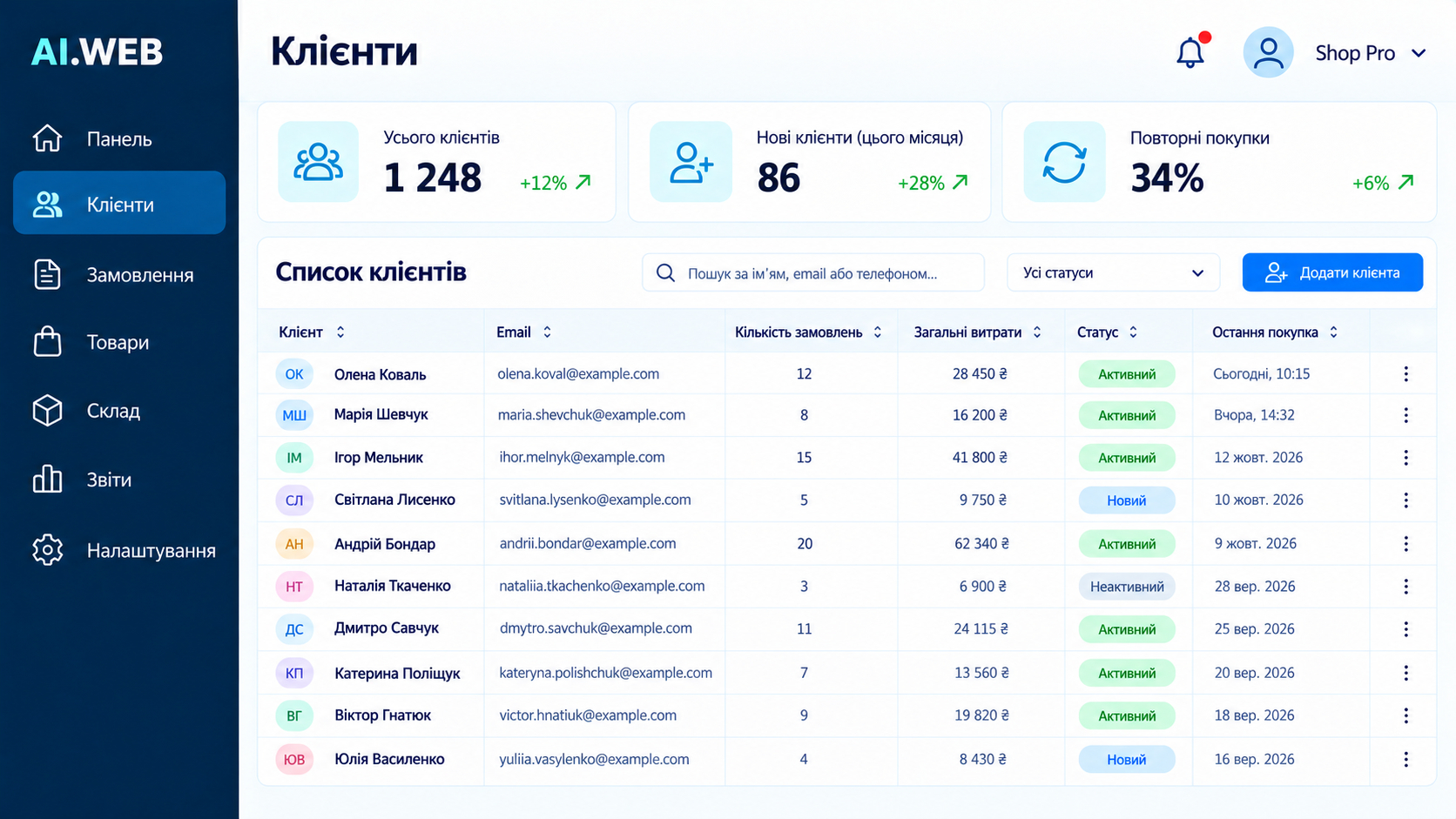
Unified customer profiles with complete purchase history, preferences, and communication threads—everything your team needs for seamless service delivery.
Streamlined CRM platform designed to automate your entire sales funnel. Centralize order management, customer relationships, inventory tracking, and fulfillment logistics in a single, unified system.
Unified customer profiles with complete purchase history, preferences, and communication threads—everything your team needs for seamless service delivery.
Centralize orders from all your connected sales channels—ecommerce stores, marketplaces, and messaging apps—in one unified dashboard.
Monitor every step of your order with real-time updates: from initial submission and payment confirmation through fulfillment, shipment, and delivery.
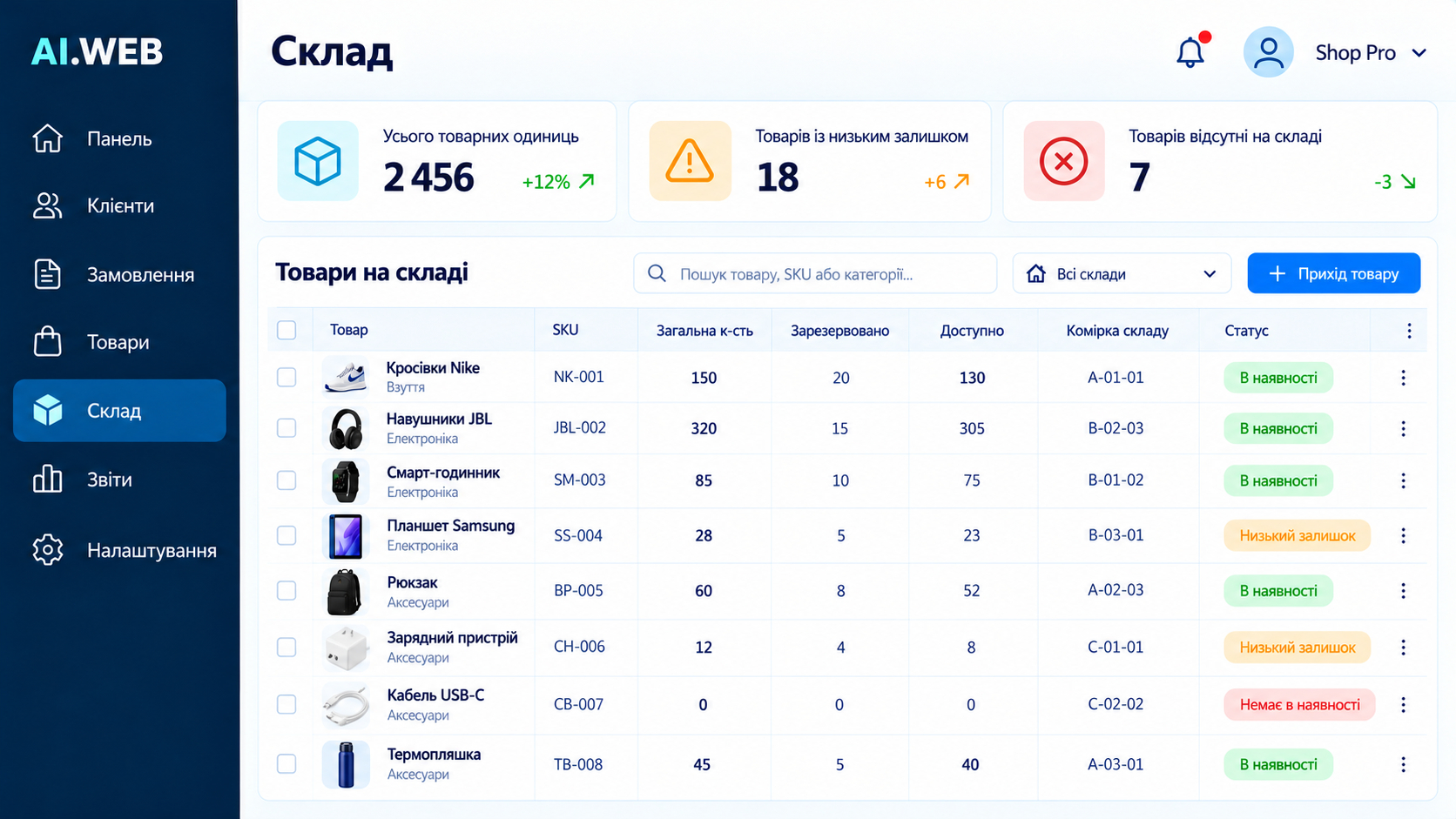
Manage product SKUs, specifications, pricing, and inventory across multiple variants including sizes, colors, and other attributes.
Generate shipping documents, save tracking numbers, and monitor package delivery through integrated carrier services.
Process and reconcile online payments, deposits, and invoiced transactions while monitoring outstanding orders and cash flow.
Streamline your procurement workflow with comprehensive inventory management, supplier order tracking, and automated purchase price monitoring across all incoming shipments.
Track revenue performance, average transaction values, top-selling products, refund patterns, and individual sales rep metrics all in one place.
Manage your entire e-commerce operation from a single CRM platform. Streamline order processing, monitor inventory in real time, engage customers effectively, and analyze sales performance without juggling spreadsheets or third-party tools.
We develop custom CRM solutions tailored to your online store's unique needs—accounting for order volume, catalog structure, sales channels, and operational workflows. You'll get more than customer management software; you'll have a comprehensive platform built to run your entire e-commerce business.
Consolidate orders from your website, marketplaces, and other sales channels into one system. Your team sees current order status, customer details, order contents, and full processing history at a glance.
Automate status updates, distribute orders among team members, track payment confirmation, and monitor fulfillment for every transaction. This reduces order processing time and minimizes costly errors.
Keep all customer information in one place—contact details, order history, lifetime value, inquiries, returns, and personalized service terms.
The system helps you segment customers, identify repeat buyers, create targeted offers, and boost retention and repeat purchase rates.
Integrate your sales operations with warehouse management. When an order is placed, the system automatically reserves inventory, updates available stock, and alerts the fulfillment team.
Inventory module capabilities include:
Automate fulfillment through built-in shipping carrier integration. Your team can generate shipping labels, retrieve tracking numbers, and monitor delivery status without switching between multiple platforms.
We integrate with major logistics providers, payment gateways, and other systems via available APIs.
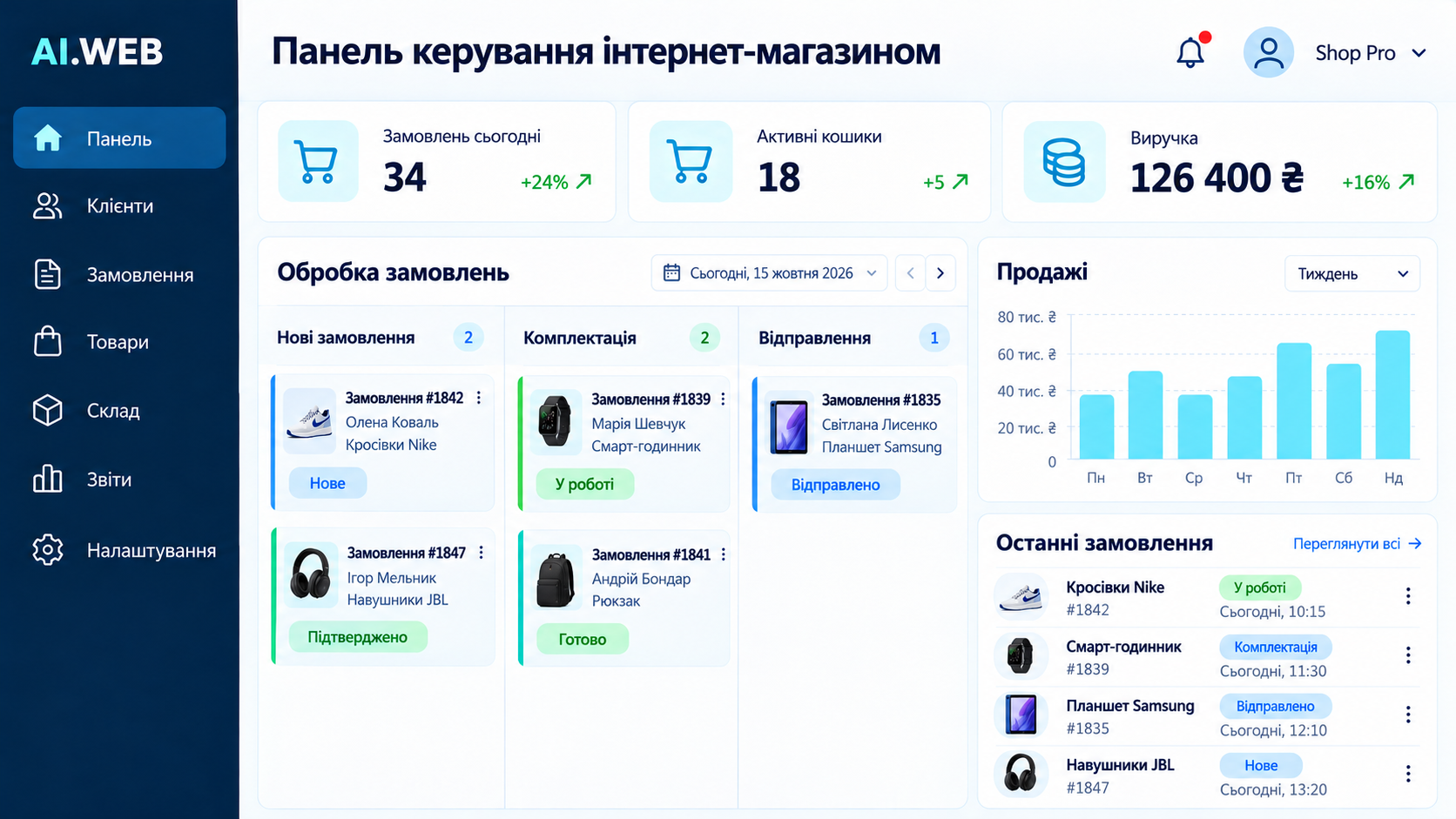
Get real-time visibility into store performance through an intuitive analytics dashboard.
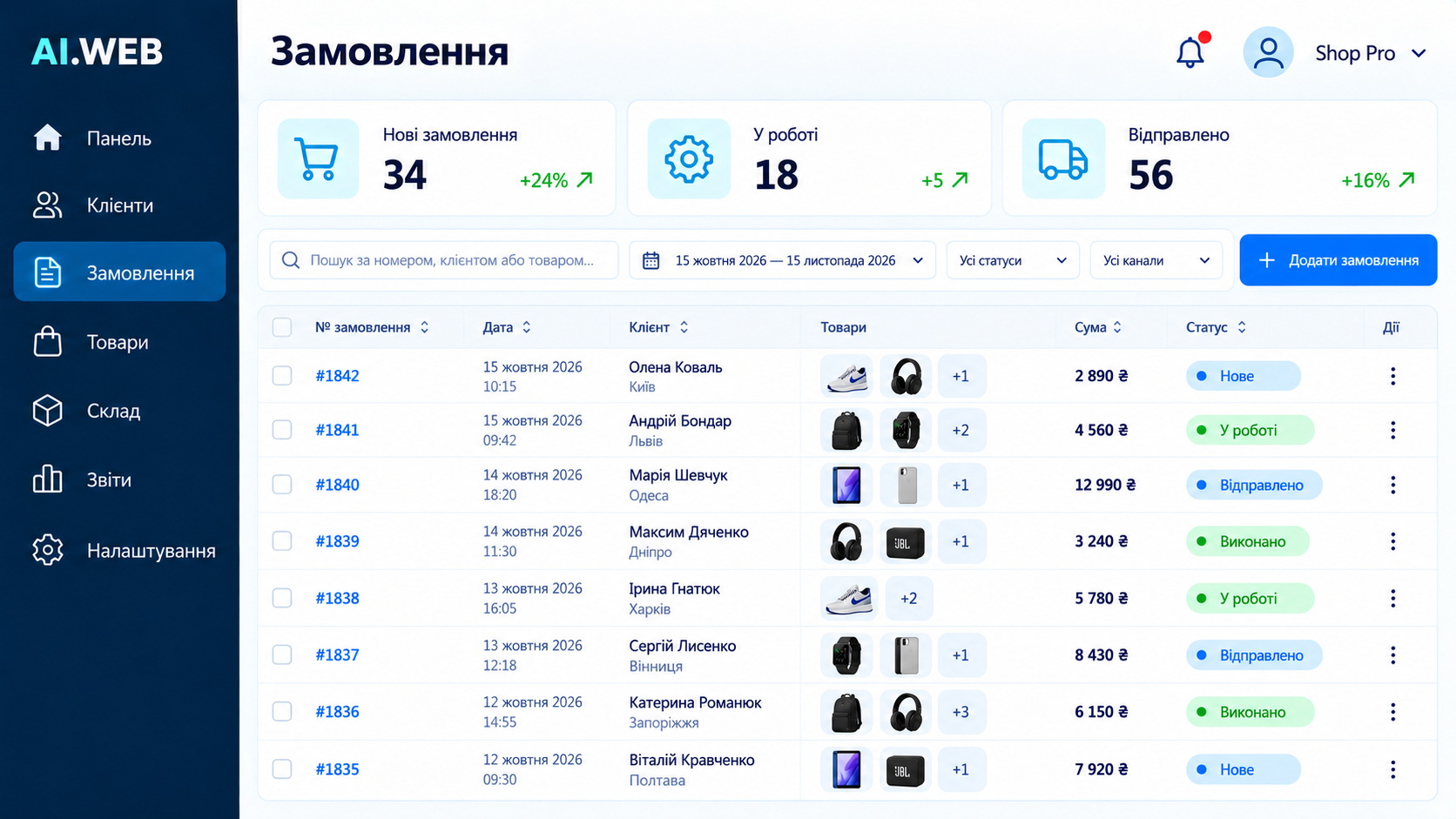
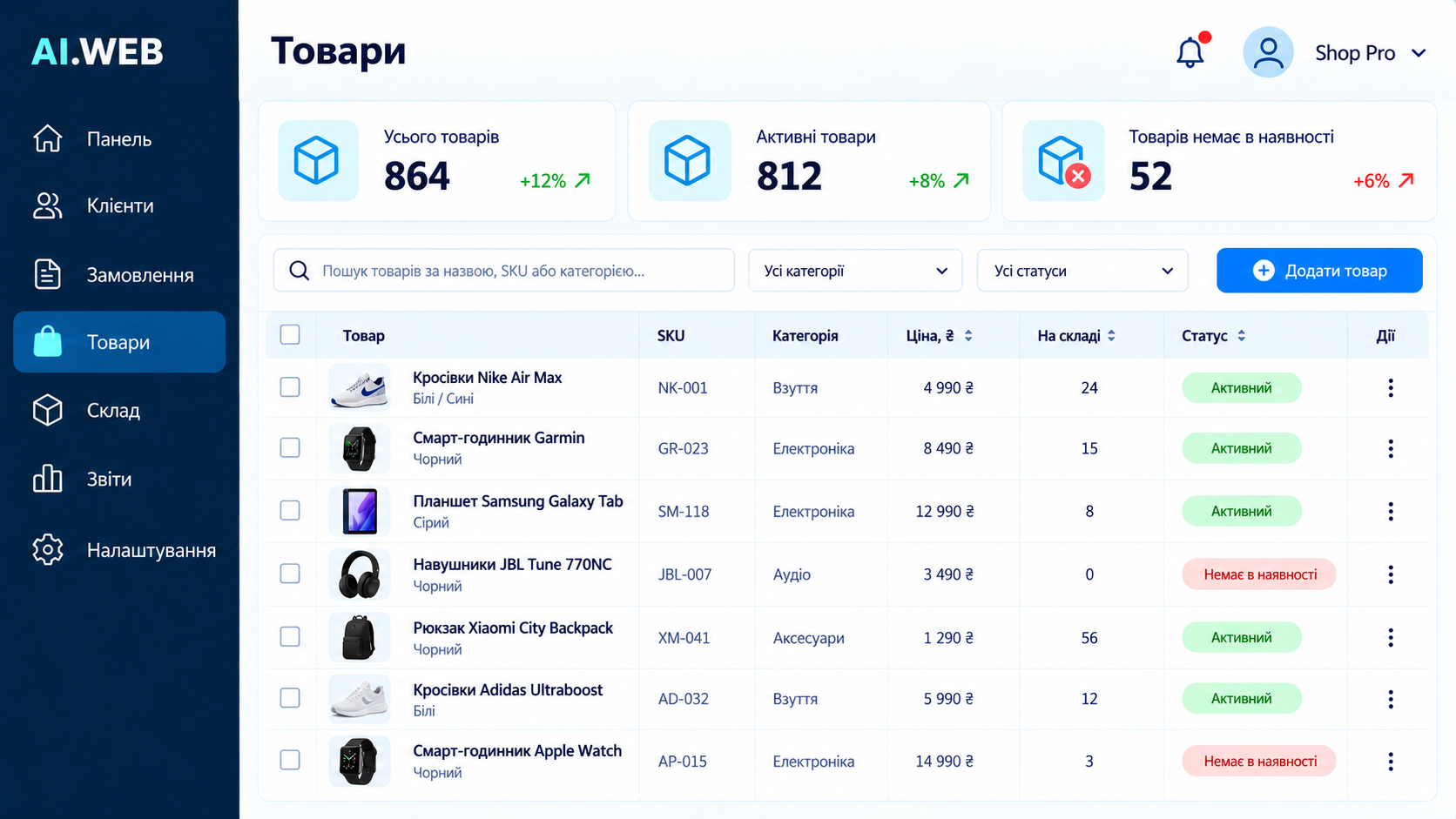
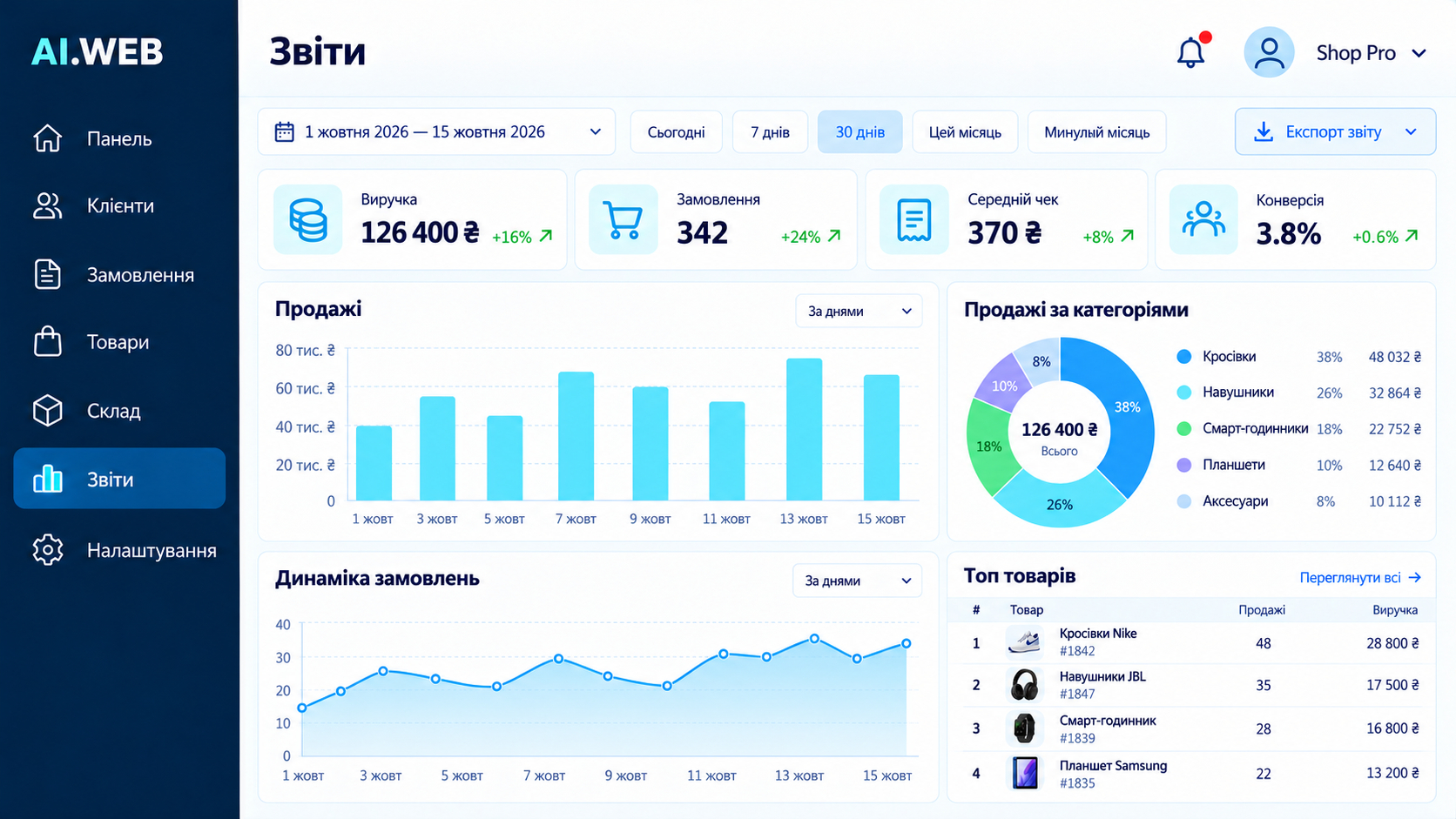
Track order volume, revenue, average order value, top-selling products, team productivity, and sales channel performance. Generate reports by date range, product category, or customer acquisition channel.
Off-the-shelf CRM solutions typically offer a standard feature set that doesn't align with your specific workflows. You often pay for capabilities you won't use, and custom requirements demand expensive add-ons.
Custom CRM development means building a system around your business—not forcing your business to fit software constraints.
We account for your catalog structure, logistics model, team workflows, pricing rules, discount strategies, warehouse setup, and required integrations.
The system scales as you grow, with new modules and features added incrementally to handle increased order volume and complexity.
The primary benefit of CRM implementation is reducing manual data entry and repetitive tasks. The system handles routine operations automatically, freeing your team for higher-value work.
For example, when an order arrives, the CRM can verify product availability, create an order record, assign a manager, reserve stock, and prepare shipping information—automatically.
Your team then reviews the details and handles tasks requiring human judgment.
This approach is especially valuable for stores with large catalogs, multiple sales channels, and high daily order volume.
We build CRM solutions designed to exchange data seamlessly with your website and external platforms. Depending on API availability, we can integrate with:
Integration scope is determined during the planning phase based on API capabilities and your business requirements.
Every project has its own requirements, so pricing and timelines vary based on your specific needs, feature set, and scope. Below are typical cost ranges for common solutions.
Final pricing is determined once we clarify your specific requirements. Paid third-party services, integrations, and custom development work are quoted separately.
We've compiled answers to your most pressing questions to help guide your decision. Can't find what you're looking for? Reach out to our team.
Ask Your QuestionHere's how it works: AI-WEB provides a proprietary CRM platform that we customize to fit your business needs. We configure modules, data fields, workflow statuses, user roles, and reporting dashboards to match your operations. Should your processes require additional functionality, we'll evaluate custom development and third-party integrations separately.
We establish your initial CRM setup by mapping core business processes around customer management, communication workflows, orders, and team responsibilities. Together, we'll define what data to capture, clarify ownership of lead handling, and outline your order fulfillment pipeline. All agreed-upon modules, reporting dashboards, and configuration specifications are documented in the proposal before implementation begins.
Before we begin, we'll prepare a detailed proposal outlining the scope of work and payment terms. We break down CRM configuration costs separately, along with platform licensing fees, hosting, and ongoing support. Any integrations, add-on modules, and third-party services are itemized as distinct line items. All payment schedules and milestones are confirmed in our service agreement.
Data migration can be incorporated into your implementation process. We start by auditing your current system's export capabilities, including field structure, data completeness, and duplicate records. From there, we identify which contacts, products, orders, and other records are eligible for import, align on scope, and validate the migration results to ensure accuracy.
We offer comprehensive hosting and managed support services, with the flexibility to deploy your CRM on a dedicated server environment tailored to your needs. If you're running your own infrastructure, we'll evaluate deployment feasibility based on our platform's technical specifications. Prior to implementation, we'll establish clear agreements regarding access protocols, system administration, backup procedures, and hosting fees.
Mobile functionality depends on your selected modules and specific workflow requirements. During the discovery phase, we identify key mobile use cases—such as client management, status updates, task tracking, and scheduling—to ensure your team can work efficiently on the go. We validate these scenarios through demonstrations and confirm any necessary interface adjustments. If a dedicated mobile app is required, we'll provide a separate assessment and cost estimate.
Support scope is defined through your service agreement and can encompass system health monitoring, technical troubleshooting and issue resolution, data backup and recovery, and ongoing system guidance. We provide comprehensive user training during implementation. Additional features, process modifications, and custom integrations are evaluated separately and quoted outside your standard maintenance plan.
AI-WEB delivers a proprietary CRM platform built for scalability, paired with comprehensive implementation and customization services. We start by mapping your existing workflows—how leads flow through your pipeline, who owns each stage, and what metrics matter to your leadership team. From there, we configure modules, fields, custom statuses, and granular permission sets to match your operations. Complex requirements and third-party integrations are scoped separately, with deployment and ongoing technical support available through a single dedicated team.
Start by setting up your client database, leads, and tasks—get comfortable with the core functionality first. Once your team is up to speed, you can roll out additional modules like inventory management, document handling, financial reporting, or automated notifications. We'll sequence the implementation based on your business priorities, accounting for module dependencies and any data migration requirements.
Standard implementations typically take 2–4 weeks to complete. More complex integrations, large-scale data migrations, and custom modules may require additional time. We'll need documentation of your workflows, sample files, migration datasets, and a dedicated point of contact to streamline approvals. Final timelines are determined after we assess the full scope of your project.
Yes, provided the necessary technical infrastructure is in place. We can configure automated lead and order routing from your website, establish data synchronization with accounting software, phone systems, shipping carriers, and payment processors. Our integration process begins with API documentation review and assessment of available connection methods, followed by data mapping and flow direction analysis. Integration availability and setup costs are evaluated on a per-service basis.
During setup, we establish role-based access controls and define the specific operations each role can perform. For instance, account managers typically need visibility into their client portfolios, department heads require team oversight and performance tracking, while accounting staff need access to payment records and financial data. We configure permissions separately for sensitive areas like financial reporting, data exports, record modifications, and deletions. All access restrictions should be validated and tested before going live.
During implementation, we provide comprehensive training on your agreed-upon workflows: adding clients, processing requests, updating order status, and assigning tasks. We'll outline the training approach, documentation structure, and post-launch support in our proposal. We've found that hands-on training works best when we use real-world scenarios from your daily operations.
Ongoing expenses typically cover platform subscription fees based on your selected plan, server hosting, technical support, and third-party integrations. Additional charges may apply for SMS messaging, voice services, email campaigns, and other add-on features you activate. We separate implementation costs from recurring fees upfront, clearly outline billing cycles, and explain what factors influence your total investment.
Establish clear data ownership, usage rights, and retrieval protocols in your service agreement before implementing CRM. Address key considerations upfront: determine who has system access, define which datasets can be exported, specify file formats, and set timelines for data transfers. If you're planning to migrate to a different platform later, let us know during the initial consultation—we'll assess export capabilities and develop a structured data handoff process.
As part of our technical support services, we can establish regular automated backups and data recovery protocols. We'll work with you to determine the backup frequency, storage location, and retrieval procedures based on your CRM hosting environment. Data exports can be customized to your needs—we'll identify the specific modules, fields, and file formats required for your workflow. Keep in mind that system backups and data migration files serve different purposes and are managed accordingly.
No results found for your search. Try different keywords or select "All Questions" to browse our complete resource library.
Tell us about your idea or task — we will propose the best solution and action plan.
 We will discuss your task
 Convenient communication
 Transparent proposal
 Attention to your needs
 Want to discuss it now?Our contacts
Describe your task and leave a contact for our reply.
© 2026 ai-web.com.ua. All Rights Reserved.

