

Web Analytics Solutions for Business Growth
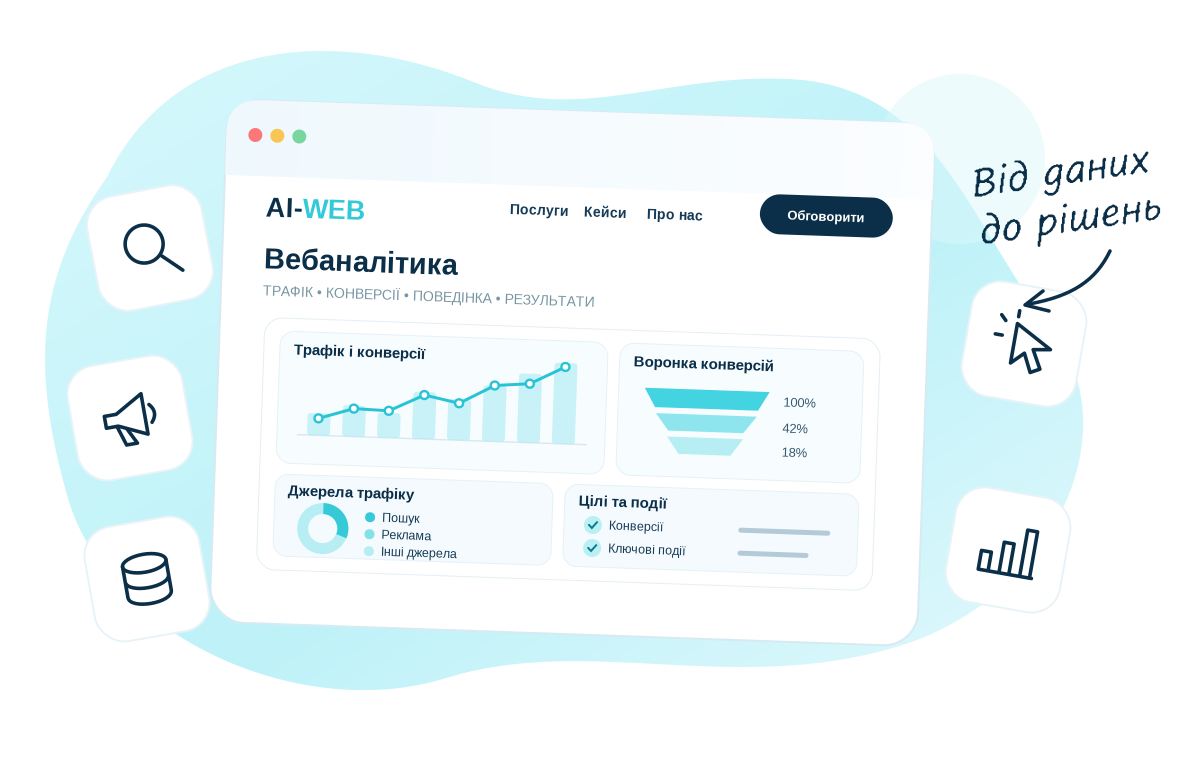
We configure comprehensive tracking and validation of visitor behavior, customer inquiries, and conversion metrics. Our team helps you measure performance across all your digital channels.
We validate your data collection setup, configure tracking for key user interactions, and connect your website metrics to business outcomes. We transform raw analytics into actionable insights that inform your marketing decisions and drive measurable results.
What's Included in This Service
- Technical and comprehensive SEO audit
- On-page SEO optimization
- Off-page promotion and link building
- Content strategy and SEO copywriting
- Analytics, monitoring, and reporting
Results
- 01
Current Analytics Review
We audit your existing tools, data integrity, and tracking setup to identify gaps and uncover business opportunities for growth.
- 02
Measurement Planning
We'll align on critical metrics, key milestones, data sources, and your reporting framework to ensure we're tracking what matters most.
- 03
Setup and Verification
We implement the required tags, events, and integrations. We test data transmission and verify accurate tracking across all touchpoints.
- 04
Analytics & Performance Optimization
We build comprehensive reporting frameworks, analyze key performance metrics, identify measurement gaps, and recommend actionable improvements.
Tools & Platforms
- Google Analytics 4
- Google Tag Manager
- Google Ads
- Google Search Console
- Looker Studio
- Google Merchant Center
- API
As a result
Fully configured analytics infrastructure with defined KPIs, conversion tracking, and comprehensive reporting dashboards to monitor your digital performance across all business channels.
Web Analytics Starts with the Right Metrics
Visitor count, page views, and average session duration help assess website activity, but they don't directly reflect business results. For an e-commerce store, key actions might include adding items to cart, initiating checkout, completing purchases, and generating revenue. For a service-based company—contact form submissions, phone calls, consultation bookings, and subsequent sales.
That's why before implementing web analytics, we identify which actions need to be measured, where they occur, and what data is required for analysis. Based on these requirements, we develop a measurement plan: a list of events, parameters, key performance indicators, and data sources.
This approach prevents situations where Google Analytics 4 is installed on a website, but the company still can't answer critical questions. For instance, how many leads did a specific channel generate, where do users encounter friction in the checkout process, or which pages need further optimization.
Why Data Quality Verification Matters
Even properly configured analytics tools don't guarantee accurate metric reporting. Events can fire multiple times, traffic sources may be misidentified, and changes to forms or checkout processes can break existing tracking setups.
When working with web analytics, we verify not just the presence of tags, but also their logic, the parameters being passed, and whether the data matches actual user actions on the site. When necessary, we audit UTM parameters, cross-domain tracking, integrations, and consent management settings for analytics technologies.
That said, web analytics has inherent limitations. Some data may be unavailable due to privacy settings, browser behavior, or platform constraints. Our goal isn't to promise perfect statistics, but to build a controlled measurement system where data sources are known, processing rules are defined, and key limitations are understood.
Clients receive more than just a set of charts—they get a foundation for analyzing website performance and marketing channel effectiveness. This foundation allows for testing hypotheses, identifying friction points in user interactions, and planning future improvements.